Valley
of Flowers
A 6-day guided expedition through one of the Himalayan region's most celebrated alpine meadows — where over 500 species of wildflowers transform a UNESCO World Heritage valley into a living tapestry of colour.
An Alpine Meadow Like
No Other in India
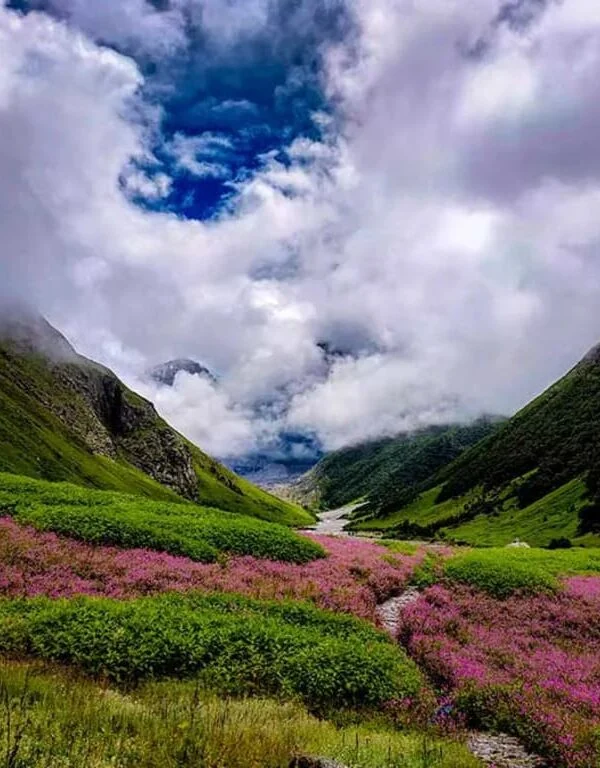
The Valley of Flowers, nestled within the Chamoli district of Uttarakhand, is widely regarded as one of the subcontinent's most extraordinary natural environments. Declared a UNESCO World Heritage Site, this high-altitude meadow sits between 3,352 and 3,658 metres above sea level and supports an extraordinary diversity of flora found nowhere else in India.
Brahmakamal Holidays has designed this 6-day programme to give you a comprehensive experience of the region — from the scenic mountain highway connecting Rishikesh to Joshimath, through the gradual ascent to Ghangaria base village, and into the heart of the blooming valley itself. Our itinerary also incorporates the revered Hemkund Sahib Gurudwara at 4,329 metres and a visit to Badrinath, one of the four sacred Char Dham pilgrimage sites.
The programme is rated moderate difficulty, making it accessible to physically active individuals with no prior high-altitude trekking experience, provided they complete adequate physical preparation beforehand.
Programme Highlights
UNESCO-Listed ValleyWalk through a protected alpine meadow carpeted in rare orchids, poppies, primulas and Himalayan blue poppy.
Hemkund Sahib GurudwaraReach one of the world's highest Sikh shrines, set beside a glacial lake ringed by seven snow-draped peaks.
Badrinath Temple VisitConclude the journey with a guided tour of Badrinath Dham, a significant Hindu pilgrimage centre of national importance.
Local Village ExperiencePass through traditional Garhwali settlements and interact directly with mountain communities.
Fully Managed ProgrammeAll permits, meals, accommodation, guides, and transport are coordinated by our experienced ground team.
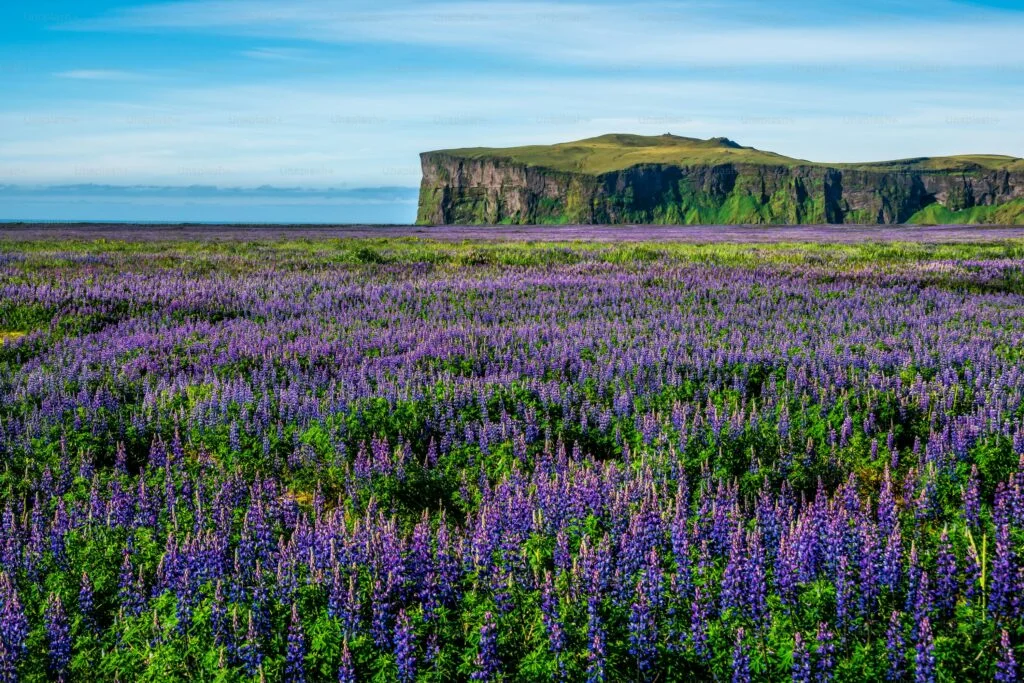
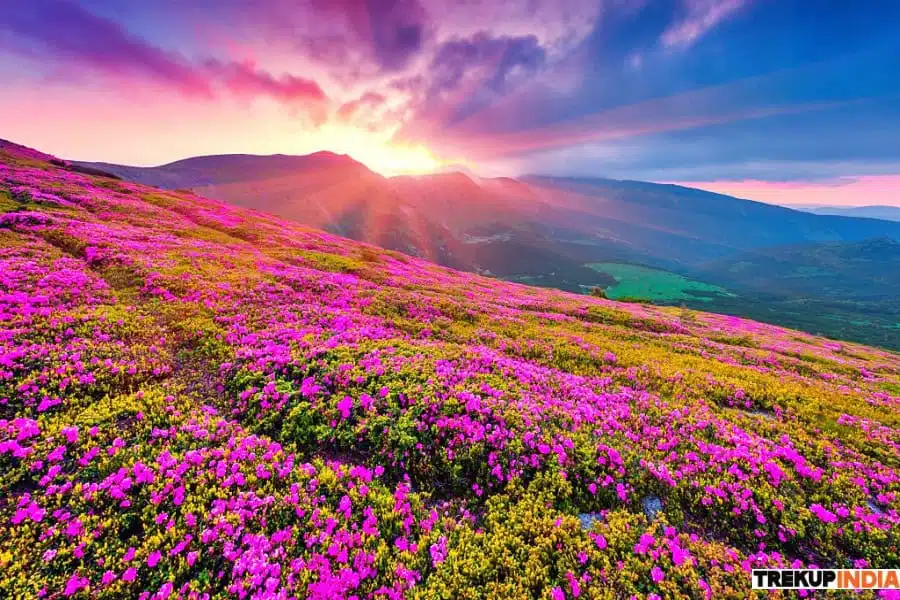
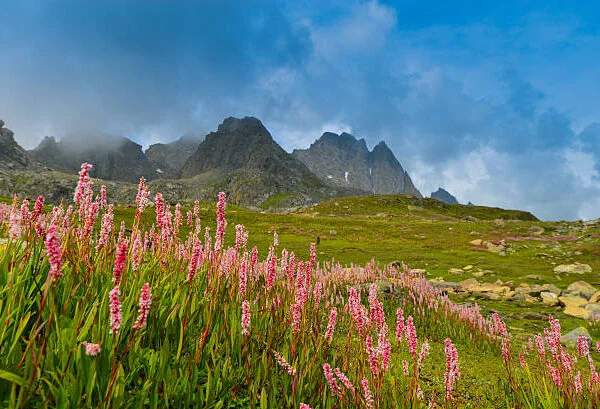
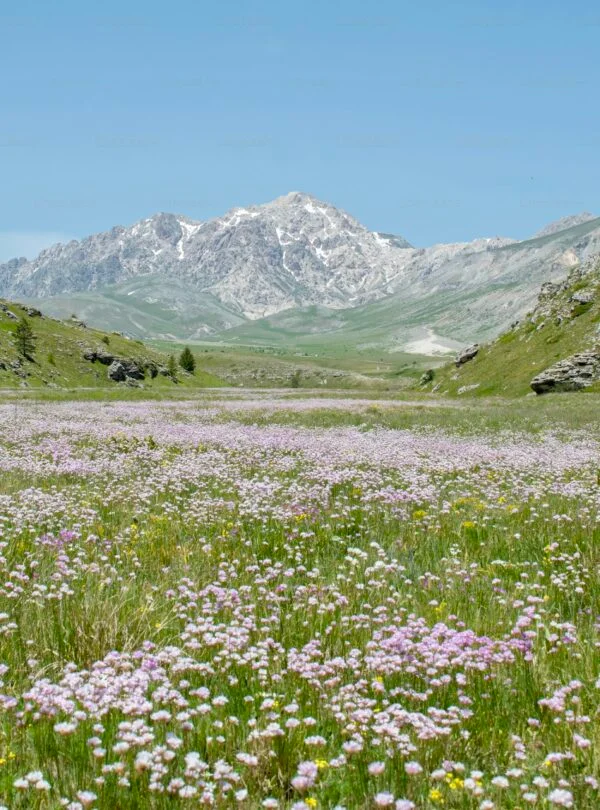
The Landscape in Bloom
Complete 6-Day Itinerary
- Depart Rishikesh after an early breakfast; journey proceeds via NH-7
- Scheduled halt at Devprayag, the sacred meeting point of rivers Alaknanda and Bhagirathi
- Continue through Rudraprayag, Karnaprayag and Chamoli — five Prayag confluence towns
- Arrive Joshimath by late afternoon following an approximately 10–11 hour drive
- Check into pre-arranged guesthouse accommodation; room allocation and briefing
- Evening orientation session covering health, safety, gear and the day-ahead schedule
- Dinner served at accommodation; early rest advised for altitude adjustment
- Short drive from Joshimath to Govindghat trailhead (approx. 20 minutes)
- Trek commences on a well-marked trail ascending alongside the Pushpawati river
- Route passes through mixed conifer and broad-leaf forest sections at lower elevations
- Brief stop at Bhyundar village to observe traditional Garhwali settlement architecture
- Gradual altitude gain of approximately 1,100 metres over 9 km — steady pace maintained
- Arrive Ghangaria (3,048 m), the sole permanent settlement in the trek zone
- Check-in to guesthouse; hot meal provided; rest evening to acclimatise
- Entry into the protected valley after permit verification at the forest check post
- The valley floor stretches approximately 8 km in length across a gradual gradient
- Guide-led identification of key species including Himalayan blue poppy, cobra lily and primula
- Designated photography time at prominent meadow viewpoints and the glacial stream crossing
- Packed lunch consumed within the valley; no open fires or waste disposal permitted inside
- Exploration of the valley's upper reaches for elevated ridge-line views of surrounding peaks
- Return to Ghangaria by late afternoon; dinner and briefing for the Hemkund ascent
- Earliest departure of the programme (typically 5:30 am) to allow adequate summit time
- The 6.5 km ascent involves a cumulative altitude gain of approximately 1,280 metres
- Trail characterised by rocky switchbacks interspersed with glacier melt streams
- Hemkund Sahib Gurudwara, constructed at the edge of a natural glacial lake, is the primary destination
- The site holds religious significance for both Sikh pilgrims and Hindu devotees (Lake Lokpal)
- Time permitted for prayer, reflection and landscape documentation at the summit site
- Descent to Ghangaria on the same trail; trekking poles recommended for the downhill section
- Descend the 9 km trail from Ghangaria to Govindghat trailhead in the morning
- Vehicle transfer from Govindghat onwards to Badrinath (approximately 25 km drive)
- Guided visit to Badrinath Temple, dedicated to Lord Vishnu and part of the Char Dham circuit
- The temple complex, situated at 3,133 metres, features notable Garhwal-style temple architecture
- Opportunity to observe Mana village — India's last inhabited border village near Alaknanda
- Return drive to Joshimath for overnight accommodation; approximately 45 km, 1.5 hour journey
- Dinner at guesthouse; review of the final day's arrangements with lead guide
- Breakfast at guesthouse; luggage consolidation and programme documentation handover
- Departure from Joshimath by mid-morning for the return drive to Rishikesh
- Optional rest stop at Devprayag for those wishing to revisit the river confluence
- Scheduled mid-route lunch break at Rudraprayag or Srinagar (Garhwal) as per traffic conditions
- Arrival at Rishikesh by late afternoon (estimated 4–6 pm subject to road conditions)
- Group drop-off at Rishikesh bus stand or pre-agreed hotel; programme concludes
- Brahmakamal Holidays representative available for post-trip documentation and feedback
What Is & Is Not Included
🌿 Included in the Package
- All statutory entry permits for the Valley of Flowers National Park
- Certified trek leader and locally trained support guide throughout
- All vegetarian meals from Day 1 dinner through Day 6 breakfast
- Accommodation in guesthouses or mountain lodges for 5 nights
- Group vehicle transfers: Rishikesh–Govindghat–Badrinath–Joshimath–Rishikesh
- Emergency first aid kit, portable pulse oximeters and supplemental oxygen
- Trekking poles available on request at no additional charge
- Experienced porters for group equipment and common supplies
- Pre-departure programme briefing document and packing checklist
- GST and all government-applicable service taxes on included services
🚫 Not Included in the Package
- Personal travel and medical insurance (strongly recommended)
- Meals consumed at restaurants or dhabas outside the programme schedule
- Personal porter charges for individual luggage beyond 10 kg
- Mule or pony hire for personal use on any section of the trail
- Alcoholic or carbonated beverages and personal snacks
- Additional nights' accommodation required due to personal delays
- Emergency evacuation costs beyond basic first aid response
- Donations, prasad or fees at temples and religious sites visited
- Laundry, telephone, internet and any incidental personal expenses
- Any service not explicitly confirmed in the booking confirmation letter
Practical Tips for a Successful Trek
Optimal Trekking Months
The Brahmakamal Holidays Difference
Begin Your Valley
of Flowers Journey
Brahmakamal Holidays operates small-group departures throughout the trekking season to ensure personalised attention, responsible management of the protected ecosystem, and a quality experience for every participant.